Signed in as:
filler@godaddy.com
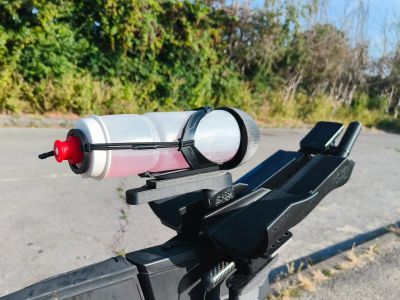
Every Speed Chaser design starts with the athlete. We look closely at the real-world challenges faced by triathletes and time trial cyclists, identifying the pain points, limitations, and unnecessary compromises found in existing products. From comfort and adjustability to compatibility, performance, and price, each design decision is made with the goal of creating a better experience for the rider.
Rather than designing products around a single bike, component, or proprietary system, we aim to maximise compatibility wherever possible. This allows more athletes to benefit from our products without being forced into expensive upgrades or complete changes to their existing setup.
Our athlete-centric approach combines engineering principles with real-world riding and racing experience. Products are developed not simply to look fast on paper, but to solve genuine problems athletes encounter when training, racing, and optimising their position. The result is equipment designed to be practical, adaptable, comfortable, and performance-focused, helping make speed more accessible to everyone.
The fastest position is the one you can hold, and the fastest equipment is the equipment you can use with confidence and ease. At Speed Chaser, comfort isn't treated as a compromise to performance, it's an essential part of it.
Our products are designed to help athletes stay comfortable, stable, and confident in aggressive aerodynamic positions for longer. We consider everything from rider support and contact points to accessibility and ease of use, ensuring our components perform not just in theory, but over the full duration of a race.
Because a product isn't truly fast if discomfort forces you out of position, or if it's too difficult to use when every second counts.
At Speed Chaser, material selection starts with the requirements of the component, not with a predetermined material. While carbon fibre offers an excellent combination of stiffness and strength, that doesn't mean it is automatically the best material for every application.
Instead, we consider the specific mechanical and functional demands of each part before selecting a material and developing the design around its properties. If a component needs to withstand impacts, deformation, or repeated loading but doesn't require exceptionally high stiffness, a tougher and more ductile material may provide a better solution. Where stiffness and dimensional stability are critical, we select materials and optimise the geometry accordingly.
And when a component genuinely requires the combination of stiffness, strength, and low weight that carbon fibre provides, we use carbon fibre. The objective isn't to avoid expensive materials, it's to use the right material in the right place.
By treating material selection as an integral part of the engineering process, rather than using premium materials simply because they are perceived as premium, we can optimise performance while controlling unnecessary manufacturing costs. This allows us to create components that deliver the properties athletes actually need while keeping high-performance equipment more accessible.
Engineering and laboratory testing can tell us a lot about how a component should perform, but ultimately, our products are designed to be ridden, not just tested in a lab.
After completing appropriate mechanical testing, we take our components out onto the road, into training, and ultimately into race conditions. This allows us to evaluate how they perform when exposed to the demands that athletes actually experience, from repeated use and changing road surfaces to high-speed riding and the pressures of competition.
Real-world testing is also a crucial part of our development process. Feedback from riding and racing regularly leads to further design iterations, helping us identify improvements that aren't always obvious during CAD development or laboratory testing. Small changes to geometry, ergonomics, positioning, accessibility, or adjustability can make a significant difference when a product is used over the course of a race.
By combining engineering analysis, mechanical testing, and real-world experience, we aim to create components that don't just perform well in theory, but are practical, comfortable, reliable, and effective where it really matters, on the bike.

PETG-CF is a composite material that combines the versatility and toughness of PETG with the reinforcement of carbon fibre. The base material, PETG, provides high toughness and excellent impact resistance alongside high homogeneity compared with other 3D-printed materials. The addition of CF enhances the stiffness and dimensional stability, making it ideal for producing low-load structural parts.
PET-CF shares very similar properties to the PETG-CF but with much greater stiffness and excellent printability. PET-CF is the ideal material for medium-load applications where the metal-like stiffness of PPA-CF isn't needed.
PPA-CF is one of the stiffest and toughest FDM additive manufacturing materials available. PPA is a semi-aromatic nylon that outperforms traditional nylons; it provides greater dimensional stability, greater toughness and stiffness, and reduced sensitivity to moisture. Combined with Carbon Fibres, PPA-CF is the perfect material for higher-load applications where complex geometries are required.
Used in the highest load applications, Carbon Fibre is the stiffest and toughest of all the materials we use. Due to higher cost compared with additive manufactured materials, we reserve carbon fibre for the most demanding applications.
For non-load-bearing parts we use sheet ABS to produce rigid self-supporting structures. ABS provides excellent durability and stiffness along with being lightweight when formed from sheeting.
The Bambu Lab X-Series printers form the backbone of our additive manufacturing production. Using the X-Series we produce the majority of our parts in PETG-CF, PET-CF, PPA-CF, and ABS-GF. We also produce moulds for the production of forged Carbon Fibre parts.
In-house, we produce carbon fibre parts in a range of different ways. Most often in the form of forge compression moulding or hand lay-up carbon fibre skinning. We also use resin infusion methods to produce some of our parts where needed. Additionally, we outsource some of our carbon fibre production for basic geometries such as tubes that are used as components in larger parts.
For large flat non-load-bearing parts we vacuum form ABS sheets. Other manufacturers often use carbon fibre to produce these non-load-bearing parts, which provides negligible weight savings at a significant cost penalty.